
What do 14th century Europe and 21st century space explorations have in common? A healthy fear of microbial diseases, of course! In particular, a fear of Yersinia pestis, the causative agent of one of the most feared diseases on Earth: the Plague. Also known as the Black Death, and the Bubonic Plague Y. pestis has caused around 200 million deaths over the course of human history (though the exact number is not known). Although the disease still exists today, a better understanding of the bacterium along with antibacterial treatment options means that it is less deadly and far less common than in history.
However, the presence of the Bubonic Plague still very much poses a global risk, and with humans looking to go beyond Earth, it could very well spread beyond our planet. Although one might hope that all things being sent to space with humans would be screened for potentially lethal diseases, such as Y. pestis it is still possible that a bacterial pathogen could sneak its way on board a mission to space or to an extraterrestrial colony. In such circumstances, an outbreak of bacterial disease would be devastating. As such, it is important we understand how bacteria – especially pathogenic ones – grow and survive in such environments.
 |
| Illustration of a 14th century Plague Doctor. Source. |
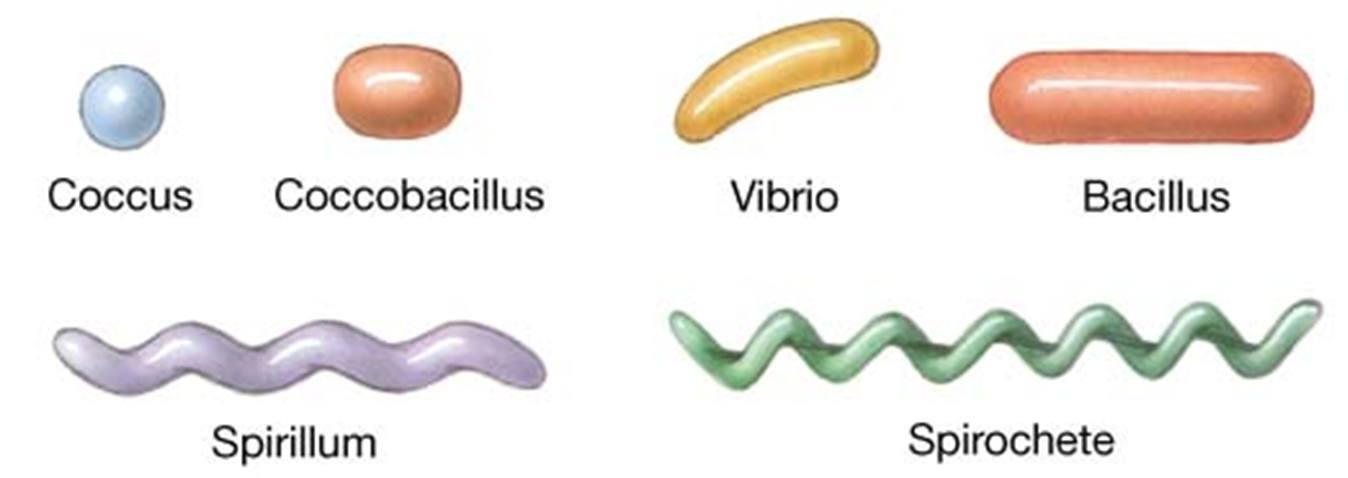
As far as pathogenic bacteria go, Y. pestis is an excellent case study. It is a gram-negative bacterium, meaning it has two outer membranes with a thin layer of peptidoglycan (a stiff layer made of sugars and amino acids) between them. It is non motile, non-spore-forming, and a coccobacillus – that is, it is neither a rod nor a sphere, but somewhere in between (1). Although it grows best at temperatures between 20-30˚C (notably the body temperature of most rodents and humans, the main hosts) it can survive between 4 and 40˚C. Y. pestis uses a Type III Secretion System (T3SS) to inject Yersinia outer membrane proteins into the host cell, where they induce several toxic effects, such as repressing actin polymerization, disrupting cell signalling, and even cell death (2). (This video explains T3SS in the context of Salmonella, another Gram-negative bacterium.)
 |
| Map of Y. pestis outbreaks between 2010 and 2015. Source. |
In space, it is often said that there is no gravity. However, what is really being experienced is microgravity, or very weak gravity. It is well known that microgravity has negative effects on humans. Similarly, bacteria grown in microgravity experience changes in their growth patterns. Previous studies had found that microgravity conditions increased the virulence potential (the ability of a microbe to become pathogenic) of some bacteria, such as Salmonella enterica serovar Typhimurium (2). To study the effects of microgravity on Y. pestis, Lawal et al. used a high-aspect ratio vessel (HARV) to produce clinorotation (CR). CR was used instead of true microgravity because it is ridiculously expensive to send things into space. CR produces microgravity conditions when the axis of rotation is perpendicular to the force of gravity and using the movement of low viscosity liquid to offset the weight of the cells.
 |
| Illustration of HARV. (A) shows an axis of rotation perpendicular to the force of gravity, while (B) shows an axis of rotation parallel to force of gravity. Source. |
Two types of Y. pestis were grown under CR: the parental strain (YP KIM/D27) and a ∆ymoA strain. The ∆ymoA strain is missing the ymoA gene, which produces YmoA, a small histone-like protein that represses the expression of the T3SS gene. The T3SS is instrumental in the pathogenicity of Y. pestis. Removing the YmoA protein is important because it allows T3SS to be expressed under all circumstances, instead of only those in which it would naturally occur. By enabling constant expression of T3SS, Lawal et al. were able to determine whether microgravity reduces the expression of genes that produce Yersinia outer membrane proteins – the primary toxins that affect host cells. To measure the virulence of the two Y. pestis strains, they measured how much the pathogen affected human HeLa cells, the relative levels of Yersinia outer membrane protein expression, and infected mice with both strains of Y. pestis.
The effect of CR-grown Y. pestis on HeLa cells was determined through a cytotoxicity assay, in which cultured HeLa cells were infected with either the parental strain, a negative control (∆yopB), or the ∆ymoA strain, all grown in microgravity conditions. Infected cultures were then examined for rounding – a cytopathic effect of Y. pestis on the infected cells – and judged on a scale of 1-5, with 1 indicating minimal rounding and 5 indicating severe rounding. The results showed that cells infected with bacteria grown in CR with unrepressed T3SS expression demonstrated much less rounding than those infected with the same bacteria grown in normal gravity.
Beyond just measuring the effects of CR-grown Y. pestis on human cells, Lawal et al. also measured the actual production of the proteins involved in the toxicity of Y. pestis as a pathogen. An immunoblot analysis showed that fewer proteins involved in the production of the T3SS were produced by CR-grown Y. pestis than by those grown in normal gravity for both the parental and ∆ymoA strains.
Both of the above results taken together suggest that microgravity – and thus, growth in space – decreases the virulence of Y. pestis. However, this conclusion is turned on its head when the third experiment’s results are taken into account. To test the virulence on an actual animal, instead of just in cell cultures and protein production, mice were infected with either strain of Y. pestis grown under CR conditions. Mice infected with the unrepressed T3SS strain had a 40% survival rate after two days of infection, with all of the infected mice dying by day four. In contrast, by day two there was a 100% survival rate of mice infected with the parental strain – also grown under CR – with only an 80% mortality rate by day four. These results indicate that despite the decreased production of T3SS proteins when grown in CR, microgravity is unable to actually reduce the virulence potential of the ∆ymoA mutant and in reality increases its pathogenicity. Therefore, it is likely that some other virulence factor is enhanced in growth under microgravity conditions that enables a higher lethality of the mutant strain compared to the non-mutated strain despite the decreased production of the primary infection toxins.
 |
| Top: The rounding effects of Y. pestis parental and ∆ymoA strains grown under CR and normal gravity on HeLa cells. Note how ∆ymoA under normal gravity causes the cells to become round. (NG = normal gravity) Bottom: Scale of 1-5 of cell rounding in HeLa cells. |
Overall, Lawal et al. demonstrated the effects of microgravity on Y. pestis and how low-gravity conditions impact its virulence. Although simulated microgravity conditions do decrease the efficacy of one of the primary virulence factors, they fail to decrease the lethality of the pathogen under the same conditions, and even going so far as to enhance it. This study could be better replicated by repeating these experiments in space, under true microgravity conditions, while future studies may examine the the cause of the observed heightened virulence. The increased pathogenicity could be attributed to other stress-response genes which contribute to the toxicity of the bacteria.
The continued persistence of Y. pestis as an infectious agent means that it is still a legitimate health threat to humans in today’s “space age”. By studying Y. pestis under simulated microgravity conditions, this study has helped improve our understanding of how bacteria may act in outer space. Such studies are important for sustained missions in confined spaces, such as contained living in planetary-based expeditions (e.g. to Mars) or extended spaceflights in orbit around a planet (e.g. International Space Station missions). Just as the Plague sent waves of fear across Europe in the 14th century, 21st century scientists and astronauts fear bacterial diseases causing devastation on remote, isolated missions. Studying pathogenic bacteria allows us to plan for and mitigate any potentially lethal outcomes of an outbreak on missions to space.
Sources:
1: https://www.ncbi.nlm.nih.gov/pmc/articles/PMC172914/pdf/100035.pdf
2: https://www.ncbi.nlm.nih.gov/pmc/articles/PMC3779001/
3: https://www.health.harvard.edu/diseases-and-conditions/plague-yersinia-pestis-
4: http://www.who.int/mediacentre/factsheets/fs267/en/


No comments:
Post a Comment